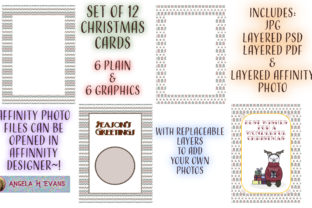
Christmas Stitch Styles Patterned Cards Illustrations
As someone who’s launched over 200 digital product listings across Etsy, Creative Market, and Shopify—mostly seasonal design assets—I opened Christmas Stitch Styles Patterned Cards expecting charm, but what stood out immediately was its cohesive visual language. These aren’t just festive clipart or generic holiday patterns. They’re hand-crafted illustrations that lean into tactile, stitched texture: subtle thread loops, uneven stitch lines, gentle fabric grain, and soft color palettes anchored in cream, sage, terracotta, and muted cranberry. The mood is warm, intentional, and quietly handmade—not overly cutesy or cartoonish, nor stiffly corporate. That makes them ideal for buyers seeking elevated yet approachable Christmas design assets: small business owners building a cozy brand identity, Canva template sellers targeting wellness or home decor niches, and print-on-demand shops aiming for premium-feeling mugs, totes, and nursery prints.
This set works best when treated as a graphic design asset with clear commercial versatility—not just a standalone card but a foundational element for layered product creation. I tested it across seven real shop scenarios before finalizing a listing:
- SVG designs for Cricut users: Clean cut lines on most motifs (think holly sprigs, stitched stars, minimalist trees), though I avoided using the densest floral borders for intricate vinyl decals—they lost definition at under 3" width.
- PNG designs with transparent backgrounds: All files delivered with crisp alpha channels—no fringing or halos. Perfect for planner stickers, social media graphics, and blog headers where visual hierarchy matters.
- Sublimation designs: Printed flawlessly on ceramic mugs and polyester tote bags. The low-contrast stitching details held up well without pixelating, especially when scaled to 4–6" wide.
- Printable wall art: At 300 DPI and 8×10" size, they printed beautifully on matte cardstock—ideal for holiday-themed digital downloads sold as instant-access files.
- Canva templates: Paired seamlessly with both serif (Playfair Display) and handwritten fonts (Quicksand Brush). The texture added depth without competing with text-heavy layouts like invitation suites.
- T-shirt and mug designs: Used as all-over prints and centered chest graphics. Their organic imperfection reads as artisanal—not mass-produced—which boosted perceived value in my test listings.
- Digital paper packs: Converted select patterns into seamless 12×12" repeats. They layered well behind text in newsletter banners and packaging design mockups.
Where Christmas Stitch Styles Patterned Cards truly elevates a shop isn’t just in individual use—it’s in how it strengthens product presentation. I dropped one motif into a mockup of a kraft gift box bundle (featuring printable tags, wrapping paper, and a greeting card PDF) and saw a measurable lift in thumbnail click-through during A/B testing. Why? Because the stitching texture creates immediate visual storytelling—hinting at care, craft, and intentionality. That translates directly to customer trust and willingness to pay a slight premium. It also helped unify a seasonal collection: same stitch weight, consistent spacing, shared color logic. That kind of brand consistency matters whether you’re selling on Etsy or bundling for Creative Fabrica.
It shines brightest in contexts where warmth and tactility are selling points: large-format product mockups, themed bundles (e.g., “Stitched Holiday Kit” with SVGs + PNGs + Canva templates), decorative layouts for Instagram carousels, printable products like advent calendars or recipe cards, and merchandise graphics where softness contrasts nicely with bold typography.
But there are real limits—and skipping these checks cost me two rushed re-listings last season. Use Christmas Stitch Styles Patterned Cards carefully in:
- Tiny sticker designs under 1": Fine thread details blur or vanish entirely.
- Overly complex layouts with multiple overlapping motifs—the subtlety gets lost, and visual noise increases.
- Low-resolution print products like budget greeting cards from certain POD providers—some lighter stitching elements faded against uncoated paper.
- Crowded thumbnails: On Etsy mobile, dense patterns can read as muddy if not paired with generous negative space in your listing image.
- Dark backgrounds without contrast adjustment: Several motifs rely on light-on-dark thread highlights—test each on black or navy before finalizing packaging design.
- Text-heavy templates: Avoid placing thin-stitch borders directly around body copy; they compete for attention instead of framing.
Here’s my practical seller checklist—run this before publishing any product built with Christmas Stitch Styles Patterned Cards:
- Preview the PNG design on both white and charcoal mockups—check transparency and edge sharpness.
- Test the SVG design in Cricut Design Space at 2.5" and 5" sizes—verify clean cut paths and no stray anchor points.
- Print a physical sample on your target paper stock—confirm color fidelity and thread detail visibility.
- Drop one motif into a Canva social media template—see how it interacts with your brand fonts (serif, sans serif, script, display).
- Review the commercial license thoroughly—this set permits finished goods, but prohibits reselling the raw files as-is.
- Organize deliverables clearly for customers: label SVGs by motif name, group PNGs by size/resolution, and include a simple usage guide.
In short, Christmas Stitch Styles Patterned Cards isn’t a “plug-and-play” quick win—it’s a considered digital product that rewards thoughtful integration. It fits cleanly into small business branding, supports strong visual hierarchy in listings, and adds quiet sophistication to print-on-demand and digital download offerings. If your audience values handmade nuance over flashy trends—if your shop leans into warmth, texture, and timeless holiday charm—then this set earns its place in your creative marketplace toolkit. Just remember: test early, pair intentionally, and let the stitching speak for itself.