22 Christmas Birds: A Designer’s Real-World Embroidery Review
First Impressions: Cheerful, Cohesive, and Craft-Ready
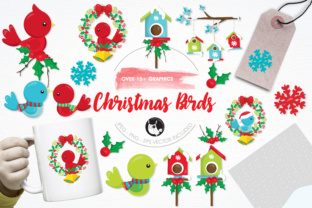
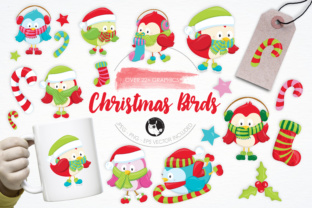
Opening 22 Christmas Birds for the first time feels like flipping through a well-curated holiday sketchbook—no frantic energy, no visual clutter. It’s a set of 22 distinct but harmonious bird motifs: robins with berry-tipped beaks, owls wrapped in holly, cardinals perched on pine boughs, and even a whimsical wren tucked inside a tiny ornament. The illustrations balance charm and clarity—clean outlines, intentional negative space, and subtle seasonal cues (a sprig of mistletoe here, a ribbon bow there) that read beautifully at embroidery scale. This isn’t just decoration; it’s design thinking applied to holiday storytelling.
A Tote Bag Test That Revealed Its True Strength
Last week, I prepped a custom embroidered tote for a local boutique’s holiday launch—cotton canvas, medium-weight, natural off-white. I chose three birds from 22 Christmas Birds: a robin, a blue jay, and a snow owl—each placed along the bottom hem, spaced for rhythm, not symmetry. What stood out wasn’t just how they stitched cleanly (they did), but how they *behaved* as finished elements. The satin-stitched beaks held crisp definition. The fill-stitched feathers avoided puffing or thread pooling—even on slightly textured fabric. And because each bird carries its own personality without relying on micro-detail, they scaled down gracefully for smaller hoops and up confidently for larger merchandise like pillow covers or tea towels.
Where It Shines—and Where It Asks for Care
22 Christmas Birds excels in projects where warmth and handmade authenticity matter most: baby embroidery on organic cotton onesies, sweatshirt embroidery for cozy family matching sets, embroidered patches for denim jackets, and aprons for artisanal bakeries. Its illustrative style reads clearly on both light and dark fabric—especially when paired with high-contrast thread colors (think deep forest green on cream, or ivory on charcoal). As an embroidery file, it’s versatile enough for custom apparel, holiday gifts, and small shop product lines—but it’s not a “set-and-forget” asset.
Use caution on stretchy knits (like lightweight t-shirts) without proper cutaway stabilizer—the open shapes and fine branch details can distort if the fabric shifts mid-stitch. Tiny hoop sizes (under 4 inches) demand selective use: avoid the most intricate birds (like the owl with layered feather tufts) unless you’re confident in your machine’s precision and thread tension. And while the design avoids dense stitch clusters, always check stitch density in tight corners—especially around wingtips or curved branches—before committing to dark fabric or layered garments like hoodies.
What It Adds to Your Finished Product—Beyond Pretty
When customers see 22 Christmas Birds stitched onto a handmade product, they don’t just register “bird + holiday.” They sense intention. Thoughtful spacing, balanced weight, and cohesive color-ready outlines signal professionalism—not hobbyist randomness. That builds trust, especially for Etsy sellers and craft fair vendors whose buyers pay a premium for perceived care. For boutique branding, these birds lend instant seasonal character without feeling mass-produced. And because each motif stands alone yet belongs to a family, you can mix and match across product types—same robin on a kitchen towel, same cardinal on a baby cap—creating subtle brand continuity.
It also elevates giftability. A personalized gift isn’t just about names—it’s about emotional resonance. A single bird stitched beside a child’s name on a quilt square? Warm. A trio of birds circling a monogram on a linen pillow cover? Elevated. 22 Christmas Birds delivers that quiet, confident charm that makes handmade feel heirloom-worthy—not just festive.
Practical Notes Every Embroidery Designer Should Run Through
- Test first—always stitch at least one bird on scrap fabric matching your final project’s weight and texture.
- Check thread color contrast before stitching on dark or saturated fabrics—some lighter fills may need underlay or denser stitch settings.
- Review stitch density in areas like overlapping wings or clustered berries; adjust if needed for durability or wash resilience.
- Confirm hoop size compatibility—some birds are designed for 5x7 hoops, others fit comfortably in 4x4. Don’t assume uniform sizing.
- Inspect small details—beak tips, eye highlights, and berry stems should remain legible after stitching, not vanish into fill.
- Mock it up in black and white—this reveals value contrast and silhouette strength better than color previews.
- Compare light/dark backgrounds—not all birds translate equally well across fabric tones.
- Use appropriate stabilizer—lightweight tear-away for stable wovens, cutaway for knits or delicate silks.
- Verify licensing—if selling finished items or digital products, confirm whether 22 Christmas Birds permits commercial embroidery use.
Final Thought: A Design That Works With You, Not Just On You
As someone who’s stitched hundreds of holiday designs—from overwrought Santas to minimalist snowflakes—I keep returning to 22 Christmas Birds because it respects the process. It doesn’t fight the needle. It doesn’t ask for perfection it doesn’t earn. It gives crafters room to interpret, small businesses room to brand, and designers room to edit—without sacrificing cohesion. Whether you’re building a seasonal collection for your Etsy shop, refreshing your boutique’s holiday line, or stitching a meaningful gift for someone who collects birds, this set lands with quiet confidence. It’s illustration with intent—and embroidery with integrity.