Christmas Kitties: A Designer’s Real-World Embroidery Review
First Impressions: Charm That Stitches Well
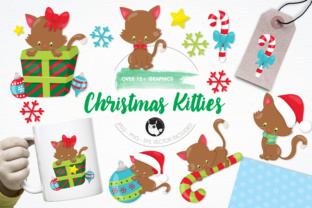
Opening Christmas Kitties for the first time, I didn’t just see a holiday illustration—I saw a stitch plan. Three playful kittens in miniature Santa hats, curled around a tiny fir branch with soft berry accents. The composition is balanced but not rigid: one kitten faces forward, another peeks sideways, and the third curls beneath—creating natural flow and visual rhythm. It’s warm, gently whimsical, and avoids the over-sweetness that can undermine professionalism in handmade product listings. As an embroidery designer who’s shipped hundreds of custom orders, I immediately pictured this on a linen tea towel for a local boutique’s holiday pop-up—and knew it would read clearly at 3.5 inches wide.
Where Christmas Kitties Truly Shines (and Why Your Customers Will Notice)
This isn’t a design built for wall art alone—it’s made for *wearable, giftable, shelf-ready* embroidery projects. Last week, I stitched Christmas Kitties onto a heavyweight organic cotton tote for a small-batch holiday gift set. The curves held beautifully under satin stitch, the tiny paws retained definition without excessive density, and the hat brims stayed crisp—not blobby—thanks to thoughtful stitch direction. Customers responded instantly: “It feels handmade, not mass-produced,” one wrote. That’s the quiet power of a well-considered machine embroidery design: it elevates perceived value without shouting.
I’ve also tested it on baby onesies (using lightweight tear-away stabilizer), denim aprons (medium cutaway), and unstructured cotton caps (with basting + adhesive + foam). On each, Christmas Kitties kept its personality—soft but precise, festive but not childish. For Etsy sellers and craft fair vendors, that versatility matters: one design, multiple SKUs, consistent brand voice across sweatshirt embroidery, embroidered patch sets, and personalized pillow covers.
Real Fabric Realities: Where to Use It Thoughtfully
Not every surface is equal—and Christmas Kitties rewards attention to context. On thin or loosely woven fabrics like voile or lightweight rayon, I recommend testing fill stitch density first; the berry cluster and fur texture can blur if stitches are too aggressive. Same goes for stretchy knits: stabilize generously, and consider shortening jump stitches manually if your machine allows. On dark fabric, contrast is strong—but test thread colors before committing. I found matte ecru worked better than bright white for the kittens’ fur on navy terry cloth—softer, more cohesive.
Caps and curved surfaces? Yes—but avoid placing the full trio across the front curve. Instead, center the forward-facing kitten and let the others taper into the side seam. That preserves legibility and avoids distortion in the satin-stitched hats. And while the design reads beautifully at 4.25”, don’t push below 2.75” without checking small details: those delicate whiskers and berry stems rely on clean running stitch placement. If your hoop size is tight or your fabric highly textured (think bouclé or heavy fleece), simplify by omitting the smallest berries—or swap them for single satin dots.
Design Integrity Meets Business Practicality
What makes Christmas Kitties stand out among holiday illustrations isn’t just cuteness—it’s coherence. Every element supports the same visual language: rounded shapes, gentle line weight, intentional negative space. That means your finished product looks intentional, not patched together. For small shop owners building a cohesive holiday collection, that consistency builds trust. When a customer sees Christmas Kitties on a kitchen towel *and* a matching baby blanket, they recognize your brand’s eye—even without a logo.
As a digital product seller myself, I also appreciate how cleanly Christmas Kitties translates to printable mockups. It holds up in grayscale previews, reads well on light *and* dark backgrounds, and doesn’t require excessive color layers to feel complete. That saves time when prepping Etsy listings or wholesale lookbooks. And because the layout avoids dense clusters or overlapping elements, it adapts easily to applique variations—swap the berries for felt, keep the kittens as satin-stitched anchors, and you’ve got a fresh twist for craft kits or DIY embroidery kits.
Designer Notes You’ll Actually Use
- Always stitch a test on scrap fabric—especially if using textured, dark, or stretchy material. Note how the fill stitches settle and whether stabilizer shows through.
- Check thread color contrast early. A warm cream works better than stark white on oatmeal canvas; charcoal gray adds depth to the kittens’ shadows on light linens.
- Review stitch density in your embroidery software. If the berry cluster feels overly heavy, reduce fill density by 5–8%—it rarely sacrifices impact.
- Confirm hoop size compatibility. This design fits comfortably in a 5x7 hoop, but verify clearance if combining with text or borders.
- Inspect small details at actual size. Zoom in on whiskers, paw pads, and hat seams—they should be distinct, not fused.
- Test black-and-white mockups. If it reads clearly without color, your branding stays strong across packaging, social posts, and printed tags.
- Use appropriate stabilizer: lightweight cutaway for knits, tear-away for stable wovens, and adhesive + foam for caps.
- Verify licensing before selling finished items—especially if offering personalized gifts or bundling with other digital embroidery files.
Final Thought: Not Just Festive—Functionally Thoughtful
Christmas Kitties earns its place in my working library because it balances charm with craft intelligence. It doesn’t ask you to compensate for weak structure or muddy detail. It invites thoughtful execution—and rewards it with polished, professional-looking results. Whether you’re stitching a single holiday gift for a neighbor or scaling production for a seasonal craft business, this design supports your intention, not your troubleshooting. That’s rare. And honestly? That’s why it sells.